

By Cheng Lin
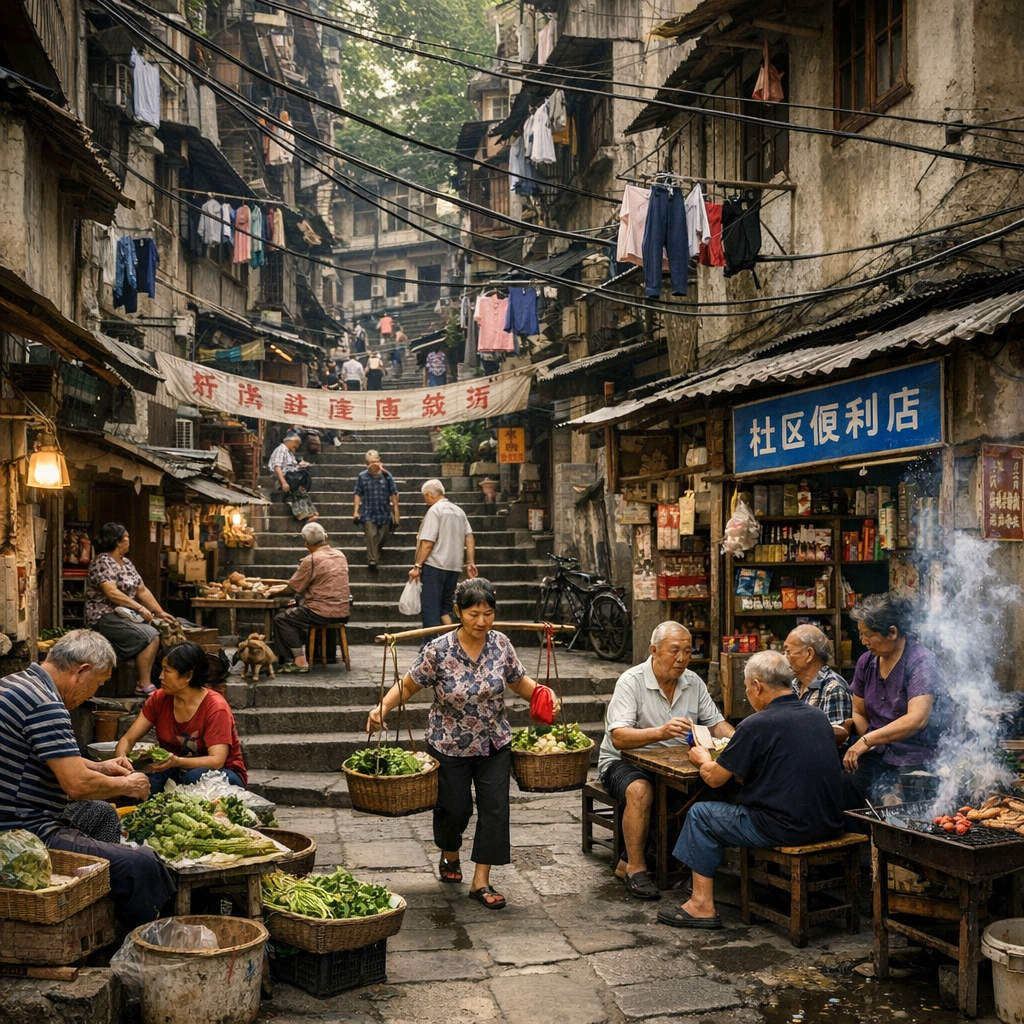
Chongqing is a city of layers—steep staircases, elevated walkways, slice-of-sky views between buildings. People often talk about the energy in the streets at night, the scent of hotpot in the air, and the mix of ancient teahouses and high-rise apartments. But beyond these vivid moments, there are quieter but equally powerful features that make a community truly livable. Drawing on research, local voices, and personal experience, here are some perspectives on what residents value most—and what more could be done.
Everyday Life in Old Communities
Take Zhongshutuo in Jiangbei District, for example. An old community with narrow lanes, two-bedroom flats, and buildings from the 1950s onwards. It lacks elevators in many blocks; kitchens and bathrooms were rarely separated in the earliest homes. Yet within these challenges some strengths: proximity to markets, services, small repair shops, and fruit vendors bring daily convenience close to home.
Many residents here carry on repairing old appliances or duplicating keys—services you don’t need to travel far to get. These everyday interactions build bonds: sharing tips, helping each other out, delivering groceries upstairs when elevators are absent. These small acts matter.
The Role of Public Spaces and Shared Rituals
Community parks, squares, and those small “pocket parks” matter more than fancy facades. In places like Shapingba Park and Sanxia Square, we saw how habits formed during COVID—such as shorter visits or avoiding crowds—mostly faded once restrictions lifted. Public space use bounced back.
Then there are traditions rooted in culture—like Mudong mountain songs, or “Sparrow Art Reviews”—held in public squares and organized by communities. They are not just performances, but conversation starters, bridging generations and encouraging neighbors to reflect on heritage together.
Obstacles: Accessibility, Amenities, and Inclusion
However, many old neighborhoods face practical hurdles: breakable or missing handrails, steep walkways that are hard to navigate for seniors, few barrier-free pathways. Silence about this doesn’t mean absence—older folks, young parents, people with limited mobility often bear the brunt.
Another gap is in cultural and recreational facilities. Some blocks lack senior center activities, cultural halls, or indoor spaces where residents can gather when the weather is poor. When public areas aren’t usable—too hot, too cold, lack of shade, too exposed—visits drop. These invisible barriers quietly shape daily rhythms.
What Would Improve the Sense of Home
Based on conversations with residents and community leaders, a few ideas rise up:
- Upgrade pathways, entrances, and stairways to include ramps, handrails, smoother surfaces so everyone can move around more safely.
- Create more small cultural nodes—rooms, teahouses, meeting corners—so people have a space to share stories and quiet time if they prefer not to be in big crowds.
- Protect and enhance old street shops: the fruit stands, small handymen stalls, informal vendors—all of these keep the neighborhood grounded and practical.
- Ensure greenery and shade—for kids, the elderly, and anyone walking long steps under Chongqing’s strong sun or in its damp cold.
- Foster rituals: potlucks in alleys, song gatherings, neighborhood traditions that reaffirm belonging.
Looking Forward
Feeling at home in Chongqing isn’t about having the newest apartment or the flashiest view. It’s about having spaces to connect, things that work well—stairs, water, green shade—and the rituals that remind us we’re part of something bigger than ourselves. If we care for those small but essential pieces, old communities can remain lively; new developments can learn humility; and every neighborhood can become more livable.