

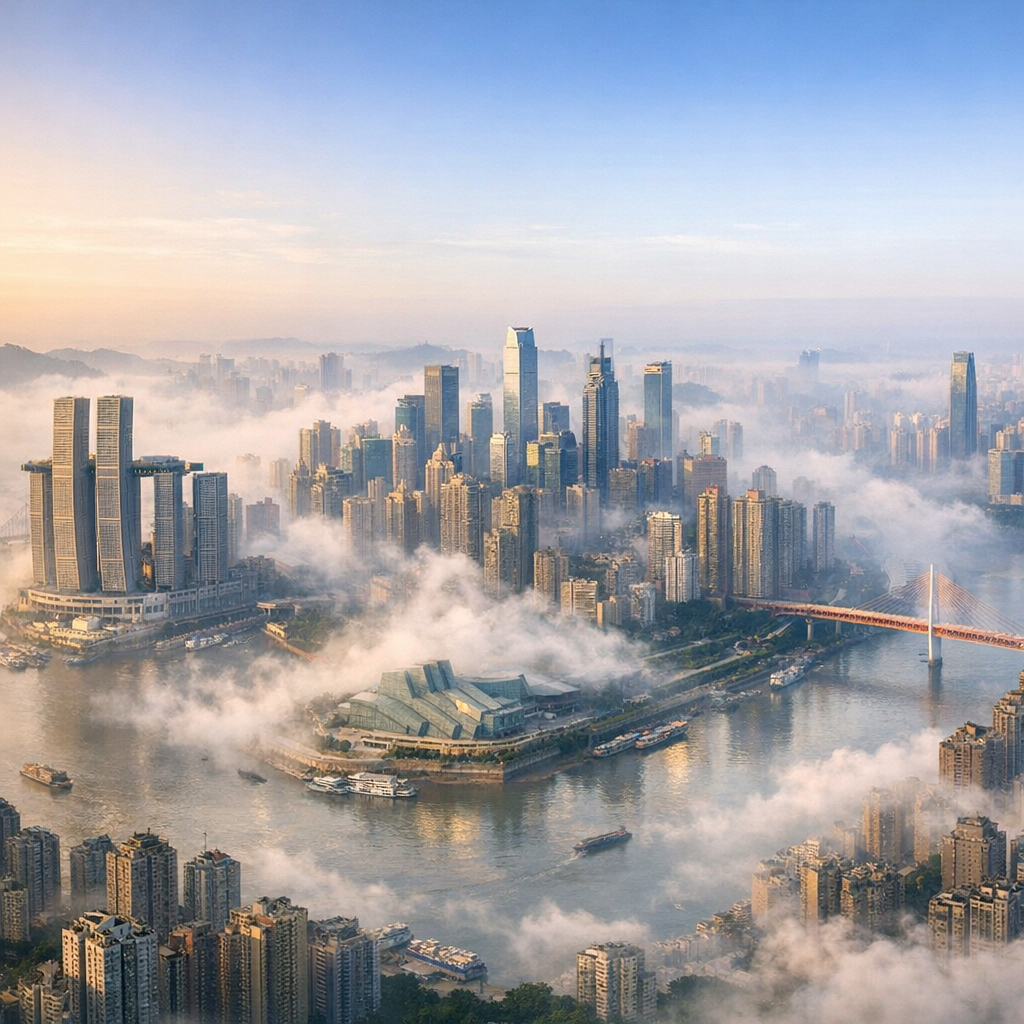
Chongqing, nestled in the heart of China, boasts a climate that is both distinctive and influential on daily life. Characterized by a humid subtropical monsoon climate, the city experiences four distinct seasons, each bringing its own set of weather patterns.
Summer: The ‘Furnace City’ Phenomenon
Summers in Chongqing, spanning from June to August, are notably hot and humid. Average high temperatures range between 30°C (86°F) and 34.4°C (93.9°F), with humidity levels often exceeding 70%. This combination has earned Chongqing the moniker ‘Furnace City’. Rainfall is abundant during this period, with June and July receiving the highest precipitation, averaging 87mm (3.43 inches) and 109mm (4.29 inches) respectively. Interestingly, much of this rain falls during the evenings and nights, providing some respite from the daytime heat.
Winter: Mild and Foggy
Contrasting the intense summers, winters from December to February are mild, with average low temperatures ranging from 6.3°C (43.3°F) to 8.7°C (47.7°F). Snowfall is rare in the city center but can occur in surrounding mountainous areas. A defining feature of Chongqing’s winter is the pervasive fog, leading to its nickname ‘Fog City’. The city experiences approximately 68 foggy days annually, primarily from late autumn to early spring. This persistent fog can impact transportation and daily activities, making it a significant aspect of the local climate.
Spring and Autumn: Transitional Seasons
Spring (March to May) and autumn (September to November) serve as transitional periods. Spring sees gradually warming temperatures and increased rainfall, while autumn is marked by cooling temperatures and decreasing precipitation. These seasons are often considered the most comfortable times of the year, offering a balance between the extremes of summer and winter.
Environmental Considerations
Chongqing’s unique topography, situated in a basin surrounded by mountains, contributes to its climatic characteristics. This geography can lead to air stagnation, exacerbating issues like fog and air pollution. The city has been proactive in addressing environmental challenges, such as waste pollution in karst caves, to preserve its natural beauty and ensure a healthy environment for its residents.
Understanding these climatic patterns is essential for residents and visitors alike, aiding in daily planning and fostering a deeper appreciation for Chongqing’s unique environmental landscape.